TL;DR
Start with a proper flange plunger, not the flat cup type — it seals far better against a toilet outlet. If that doesn't clear it, pour a litre of hot (not boiling) water and a squirt of washing-up liquid into the pan, let it sit for a few minutes, then plunge again. Still stuck? A manual toilet auger reaches further than a plunger ever will. If the same toilet keeps blocking despite all three, that's usually a sign of a fault further down the system rather than something a plunger will ever permanently fix — request a free quote online to get it looked at properly.
Step-by-Step DIY Unblocking
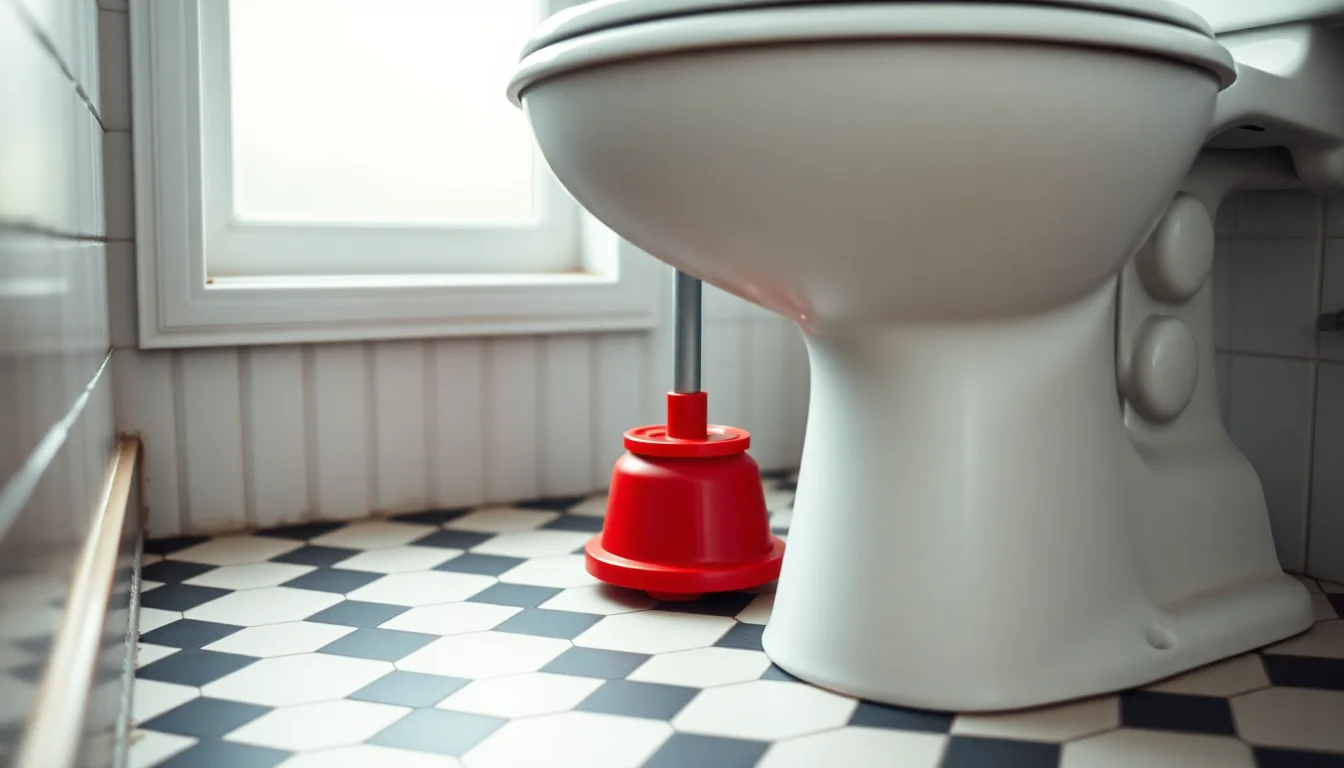
**Plunger technique.** Use a flange plunger — the type with an extended rubber lip that folds out from the cup — because it forms a far better seal around a toilet's odd-shaped outlet than a flat sink plunger. Push it down gently first to expel trapped air rather than blast it back at you, then pump firmly up and down for fifteen to twenty seconds in a steady rhythm. Jerky, half-hearted strokes break the seal and waste the effort. It's common to need two or three attempts before you feel the water start to drop, so don't give up after the first go.
**Hot water and washing-up liquid.** If plunging alone hasn't shifted it, pour around a litre of hot water — hot from the tap, not boiling, which can crack a cold ceramic pan — into the bowl from around waist height, so it goes in with some force. Add a generous squirt of washing-up liquid and leave it for a few minutes. The heat softens organic matter and the washing-up liquid acts as a lubricant, so when you plunge again afterwards it often finishes the job the first attempt couldn't.
**Manual toilet auger.** For anything that's still holding after those two steps, a hand-cranked toilet auger — sometimes called a plumber's snake — is the next safe option. Feed the flexible cable into the outlet until you feel resistance, then turn the handle clockwise to break up or hook whatever's causing the blockage, drawing it back slowly rather than yanking it. If the auger meets something that feels solid and won't give at all, stop rather than forcing it; that's more often a sign of a deeper fault than something that will free up with more pressure.
What Not to Do
**Chemical drain cleaners.** Never pour a caustic chemical cleaner into a blocked toilet. These products are designed for slow-moving sink drains, not a pan that's already holding standing water — the chemical simply sits there, can etch or crack the glaze on older vitreous china, and creates a genuinely hazardous mix for anyone (including you, or an engineer later) who then has to work on it. If chemicals have already gone in and the blockage hasn't cleared, mention that when you get in touch so it can be handled safely.
**Excessive force.** A plunger or auger used with real determination rather than technique can crack the pan, particularly in older properties where the ceramic has had decades to become more brittle. A cracked pan doesn't just mean a replacement toilet — it can mean a slow leak into the floor below that goes unnoticed for weeks. Work with steady, controlled pressure and stop the moment something feels unusually solid or immovable.
Why Toilets Keep Blocking
A toilet that blocks once is normal. A toilet that blocks every few weeks, no matter how carefully you plunge it clear each time, is telling you something the plunger can't fix. Repeated blockages usually point to a problem further down the system — a partial obstruction lower in the soil pipe, a section of drain that's cracked or been infiltrated by tree roots, or in some of Nottingham's older Victorian terraces — think Sneinton and Radford — original clay pipework, sometimes since replaced with pitch-fibre pipe from the mid-20th century, that's simply reaching the end of its working life. An old low-flush cistern can make matters worse, since it was never designed to shift the volume of modern toilet paper with a single flush. Until whatever's actually restricting flow downstream is found and dealt with, clearing the toilet itself only ever buys you a few more weeks.
When to Stop DIY and Call in a Professional
A few signs mean it's time to stop reaching for the plunger and get someone to look at the wider system:
- Water rises close to the rim on every flush, even when nothing appears to be visibly blocking the pan
- The same toilet blocks again within days or weeks, despite clearing it properly each time
- Other fixtures — a nearby sink, shower or a second toilet — start backing up or gurgling at the same time
- A smell develops alongside the blockage that doesn't go away once the pan is clear
Any of these point to something beyond the toilet itself. For a blocked pan that genuinely won't clear, our blocked toilet service deals with the immediate problem, while our wider blocked drains service covers the rest of the system if the fault sits further along. Where blockages keep recurring and the cause isn't obvious, a CCTV drain survey — graded against the WRc MSCC5 standard — shows exactly what's happening inside the pipe: root ingress, a cracked joint, a partial collapse, so the actual fault gets fixed rather than just cleared again.
When you're ready for a proper look at it, request a free quote online and we'll arrange a convenient time to assess and resolve the issue.
Frequently Asked Questions
**How do you clear a blocked toilet without a plunger?** Hot (not boiling) water combined with washing-up liquid, left to sit for a few minutes before flushing, will shift many minor blockages on its own. For anything that doesn't respond, a manual toilet auger reaches further into the pipe than hot water alone ever can.
**What can I use if I don't have a plunger to hand?** Washing-up liquid and hot water poured from height is the most reliable household method — the liquid lubricates while the heat softens whatever's causing the blockage. It won't shift everything, but it's worth trying before anything more drastic.
**How much does it cost to unblock a toilet?** It depends on the cause — a straightforward blockage is a different job to one caused by a fault further down the drain that needs investigating first. Rather than guess, request a free quote online and we'll assess what's actually needed before any work starts.
**My toilet is blocked — what should I do first?** Try a proper flange plunger before anything else, since it's the quickest and least disruptive method. If that doesn't work, move on to hot water and washing-up liquid, then a manual auger — and if it keeps happening, treat it as a sign to get the wider drain checked rather than repeating the same fix each time.